Nobody running a real estate agency has spare time to spend tracking regulatory bulletins for a living, and that’s a fair concern to raise. The good news is you don’t need to. What you actually need is a light, consistent habit, not a full time compliance research role, and the difference between those two things is what this article is about.
Why this matters, and why it isn’t hypothetical
We’ve already covered one concrete example elsewhere in this series: AUSTRAC recently changed how the Annual Compliance Report period works, shifting from a calendar year to a financial year basis. An agency that built its program once and never checked back in would have no reason to know that, and could easily miss a submission window as a result, not through carelessness, just through genuine unawareness.
This is exactly the category of change that makes regulatory monitoring a real, if modest, ongoing task rather than something you handle once during setup and never revisit. AUSTRAC’s guidance, reporting requirements, and the underlying rules do get updated over time. Not constantly, and not usually dramatically, but often enough that a program written once and never checked against current guidance will eventually drift.
A proportionate approach, not a demanding one
The goal here isn’t to read everything AUSTRAC publishes as it happens. It’s to build a light, deliberate habit that catches the changes that actually matter to your business, without turning into a task nobody has time for and therefore nobody actually does.
Assign it explicitly, even if lightly. This is a governance point as much as a practical one. If “keeping an eye on regulatory updates” isn’t anyone’s named responsibility, it tends to fall through the cracks entirely, with everyone assuming someone else is watching. Give it to your Compliance Officer as an explicit, if modest, part of the role, even if it’s genuinely just a short check in periodically rather than a daily task.
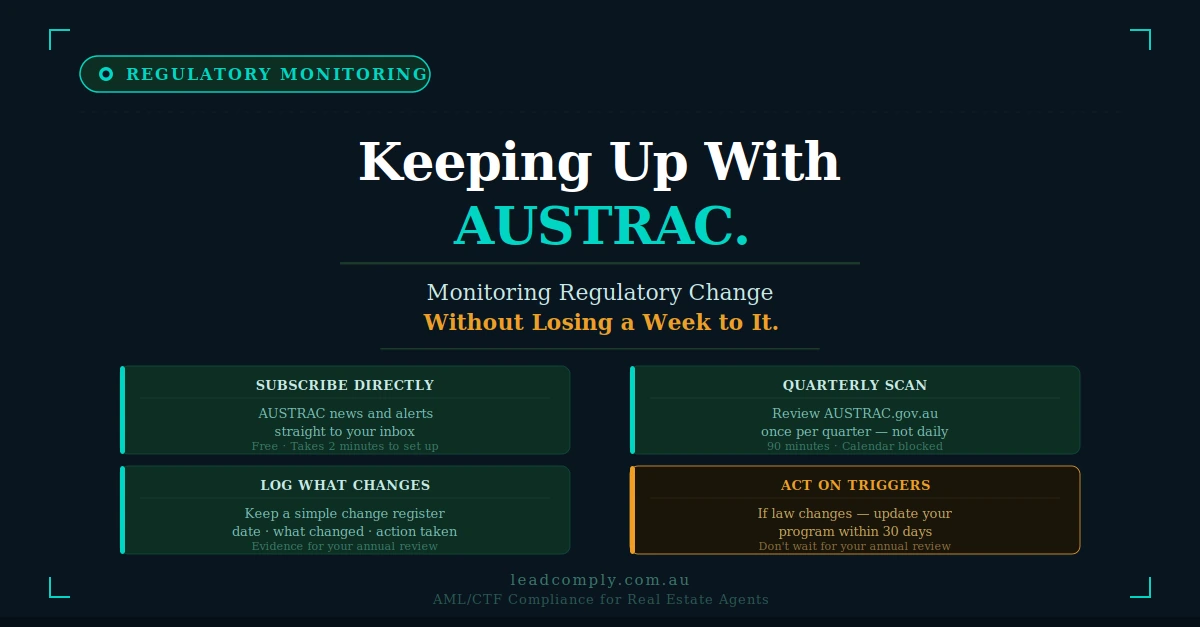
Tie it to a rhythm you already have, rather than creating a brand new standalone task competing for attention. If you’re already doing a periodic program review or a training refresh, a brief check of AUSTRAC’s published updates fits naturally alongside that existing habit, rather than needing its own separate reminder that’s easy to let slide.
Check AUSTRAC’s own published guidance directly, at whatever interval feels sustainable for your business, rather than relying entirely on secondhand summaries. Industry commentary, including content like this, is genuinely useful for context and practical interpretation, but for anything that would actually change how your agency operates, the primary source is worth confirming directly.
Keep the time investment realistic. A brief, focused check every quarter, even something as modest as twenty minutes, genuinely beats an ambitious daily habit that quietly stops happening after the first few weeks because nobody can sustain it. Consistency at a modest pace outperforms intensity that doesn’t last.
What to actually do when something’s changed
Finding out something’s changed isn’t the end of the task, it’s the start of a short, deliberate process. Don’t rush to rewrite your whole program the moment you spot an update, and don’t ignore it either. Assess it properly: does this actually affect how your agency operates, does it change something in your risk assessment, your procedures, or your reporting obligations, using the same triggers we’ve covered separately for updating your risk assessment.
Document that review, even when the honest conclusion is that no change is needed. “Reviewed the update to X on this date, determined it doesn’t materially affect our program because Y” is a genuinely useful record to have, both for your own clarity later and as evidence that monitoring is actually happening, not just assumed.
A worked comparison
One agency builds its program properly at the outset and then doesn’t revisit AUSTRAC’s guidance again for two years. When their first Annual Compliance Report comes due, they discover the reporting period itself has changed since they last checked, and they’re scrambling to understand a shift they had no idea was coming, at exactly the moment they can least afford the surprise.
A second agency built the same program, but their Compliance Officer spends roughly twenty minutes each quarter checking AUSTRAC’s published updates as part of an existing routine. They noticed the reporting period change months in advance, made a brief note in their program records, and had it addressed calmly well before their submission window opened.
Same starting point, same size business, genuinely different amount of stress when it actually mattered.
Where Lead Comply fits into this
This entire article series exists partly because of exactly the habit we’re describing here, checking primary AUSTRAC guidance directly, staying current on what’s actually changed, and translating it into practical terms for real estate agencies specifically. Reading genuinely current, well sourced industry content like this can be a useful supplement to your own quarterly check, though it shouldn’t replace confirming anything significant directly against AUSTRAC’s own published guidance when it matters to your program.
The Lead Comply AML Portal’s free account gives your agency the operational foundation, CDD workflow and training modules, to actually implement changes once you’ve identified them, without needing new software or a new arrangement every time something in your program needs updating.
Create your free account → Lead Comply AML Portal
